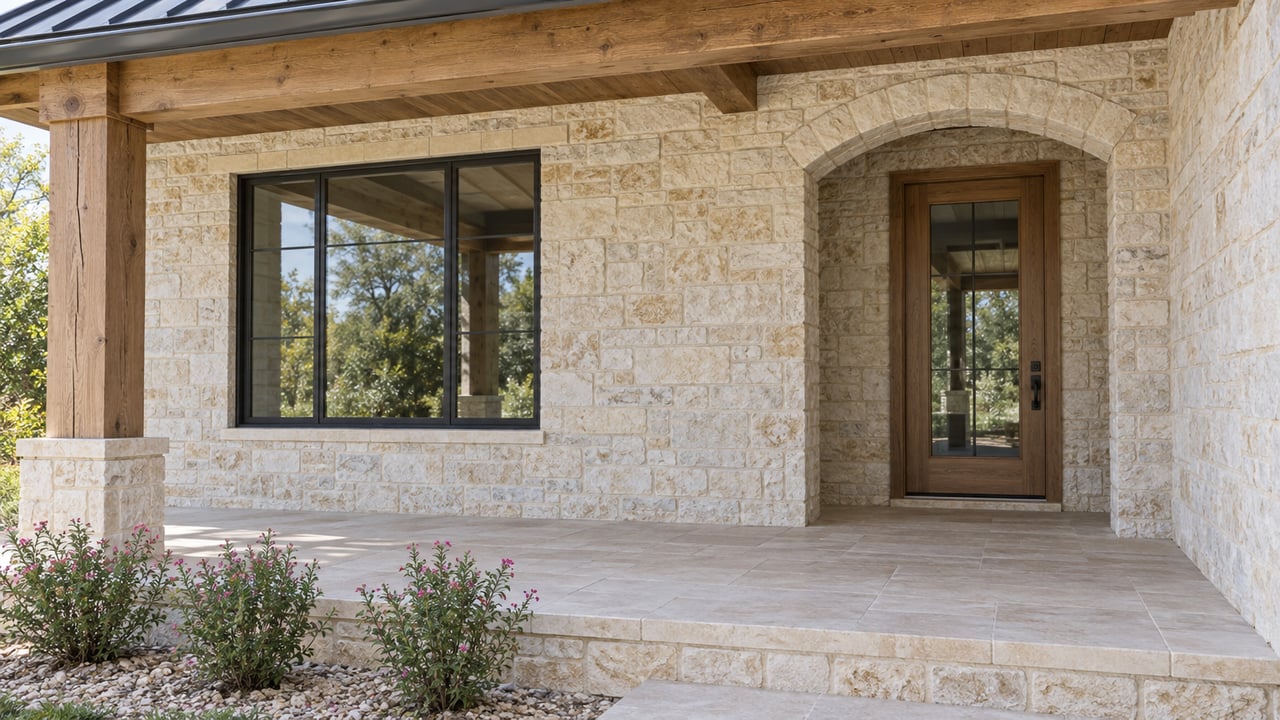
Why a New Frieden Home's Second Tax Bill Rarely Matches Its First
Picture a lot on Interlaken Street on the first morning of the year. It might be graded and staked, or framed and dried in, or a few weeks from final walkthrough. Whatever stage it has reached that morning is what the appraisal district values for the entire tax year. Anything built after that waits for the next January 1.
In Frieden, most homes are built new on lots bought from the developer. That one date explains more about a buyer's tax bills than any rate the city, county or school district adopted this fall. The 2026 rates went up and down in ways that made the news. For an owner of new construction, the bigger change in the bill comes from the house itself showing up on the appraisal roll, and the homestead cap can't spread that change out.
The rule is short. Texas Tax Code Section 23.01 requires taxable property to be appraised at market value as of January 1. It also requires the appraisal to account for each property's individual characteristics. A home that is a lot on that date, or a shell, is appraised as what it is that morning. The finished house goes onto the roll at the next January 1 appraisal.
That's why a new Frieden home's first bill can look modest. It may describe a property that no longer exists by the time the bill arrives. The second bill describes the house the owner actually lives in. When a buyer plans a monthly budget around that first statement, the second one can come as a shock.
The timing depends on when construction crosses a calendar line. A home that finishes in December and a home that finishes in February may be the same house at the same price, but they reach their first full appraisal nearly a year apart. When comparing a completed spec home with a build-to-order contract, ask where each one will stand on the next January 1.
Many buyers know Texas limits how fast a homestead's appraised value can rise. The Texas Comptroller's guidance on valuing property sets out how that limit works. Two details matter most in a neighborhood of new homes.
First, the cap only limits growth on top of the prior year's appraised value plus the market value of all new improvements. The Comptroller defines a new improvement as one made after the most recent appraisal that increases market value and was not in the prior year's appraised value. A house built on a lot that was appraised as land is exactly that kind of improvement. It joins the roll at market value, outside the 10% ceiling.
Second, timing. The limitation takes effect on January 1 of the tax year after the owner qualifies for the homestead exemption. It belongs to the owner and doesn't come with the house. A resale buyer doesn't take on the seller's capped history, and a buyer of new construction has no history to take on.
Here is the order of events for a home bought as a lot, built during one year and occupied as a principal residence:
| Point in time | What the appraisal sees | Where the cap stands |
|---|---|---|
| January 1 before or during construction | The lot, or whatever stage of construction exists that morning | No homestead qualification yet, so no cap |
| First January 1 after completion | The finished home at market value, added as a new improvement | Starts only in the year after the owner qualifies for the homestead exemption |
| Following years | The prior appraised value, with any increase limited | Increases limited to 10% plus any new improvements |
The cap starts working only after the largest increase has already landed.
The homestead exemption itself is large. The Comptroller lists the mandatory school-district residence homestead exemption at $140,000 for owners who hold an ownership interest and live in the property as their principal residence. That exemption applies to the school portion of the bill, which is the largest single rate on a Frieden property. The same guidance says a buyer who purchases after January 1 may qualify for the applicable portion of the year if the previous owner did not claim the exemption for that year.
The fall headlines were about rates. The Fredericksburg Standard reported that City Council approved an $81.2 million budget for 2026-2027 on a 3-2 vote and adopted a rate of 24.43 cents per $100, which the paper described as "a 1.24% increase from the no-new-revenue rate." Gillespie County adopted its rate on September 15, 2026, and Fredericksburg ISD adopted its rate on August 19, 2026.
The Gillespie Central Appraisal District's 2026 Truth-in-Taxation summary puts the adopted rates next to each unit's no-new-revenue rate. That comparison explains what happened. All figures are per $100 of taxable value.
| Taxing unit | 2025 adopted | 2026 no-new-revenue | 2026 adopted |
|---|---|---|---|
| City of Fredericksburg | $0.227427 | $0.241342 | $0.244342 |
| Gillespie County | $0.2685 | $0.2770 | $0.2770 |
| Fredericksburg ISD | $0.7731 | $0.7984 | $0.7731 |
In all three rows, the 2026 no-new-revenue rate is higher than the rate adopted in 2025. When that figure rises above last year's rate, it means the existing base of taxable values held flat or shrank. A unit would need a higher rate just to collect the same revenue as before. The city's headline increase of about 7% in its rate mostly reflects that, plus the 1.24% margin the Standard described. The county adopted exactly its no-new-revenue rate. Fredericksburg ISD left its rate at $0.7731, which is below its own no-new-revenue figure of $0.7984.
For an established resale owner, that table explains much of the 2026 bill. A rate increase spread over a softer value base doesn't move every bill the same way, and the outcome depends on how that home's appraisal changed. For a new-construction owner in Frieden, the table matters much less than the change from lot to house. A 7% move in one of three rates is small next to a property that was a lot one January and a finished home the next.
One more number belongs on a buyer's worksheet before closing. GCAD's 2026 rate schedule, dated September 28, 2026, lists two combined rates for property in the Fredericksburg school district:
The gap equals the city's rate, about $244 a year for every $100,000 of taxable value. Frieden's history points toward the city line. A City of Fredericksburg staff memo from 2017 described the roughly 230-acre Frieden Lakes proposal, said the applicant intended to annex the entire project, and noted the land was contiguous to city limits. Council held annexation hearings that June. When the Planning and Zoning Commission approved the final plat for Phase 1 of the Frieden Subdivision on Highway 87 South in November 2018, staff noted that the preliminary plat and annexation had been considered together the year before.
The parcel record decides it, though. Gillespie CAD lists the City of Fredericksburg among the taxing entities it appraises for and offers a property search where a buyer can look up the specific address. A tax professional or the appraisal district can confirm which units apply to that parcel. The schedule also lists Gillespie County MUD #1 at $1.00 per $100 and notes that it affects only the Friendship Oaks Subdivision, so that line doesn't apply to Frieden.
Two Frieden costs never appear on a GCAD statement, but they belong in the same monthly figure. Frieden's FAQ says the community is run by a property owners' association with dues currently set at $250 per month per residence. The community covenants also call for a $500 working-capital contribution when a lot is acquired. Those dues are set by the association, and nothing on the appraisal timeline changes them. Of all the recurring costs above, they are the easiest to predict.
Does the seller's homestead cap come with a resale home? The Comptroller ties the limitation to the owner who qualifies for the exemption. It takes effect on January 1 of the year after that owner qualifies and expires when they no longer qualify.
Can a buyer claim the homestead exemption in the year of purchase? The Comptroller's exemption guidance says a buyer who purchases after January 1 may qualify for the applicable portion of that year if the previous owner did not claim the exemption for that year. GCAD posts the standard residence homestead application on its forms page.
Which combined rate applies to a particular Frieden address? It depends on whether the parcel falls inside the City of Fredericksburg tax unit, and the appraisal district can confirm that for a specific address. The two 2026 combinations differ by the city's $0.244342 rate.
This post is general information, not legal, tax or financial advice. Buyers should confirm their own appraisal, exemption and escrow questions with GCAD, a tax professional or their lender.
If you're comparing a finished Frieden home with a build-to-order contract, Mimi Bartel and Adam Carroll can help you see where each one will stand on the next January 1 and what that means for your monthly costs, so the second tax bill matches the plan you made at closing.


Our approach is rooted in strategy, insight, and uncompromising professionalism. With advanced academic credentials and experience in advisory, mergers and acquisitions, and multi-million dollar production, we bring analytical precision to every negotiation. We believe luxury is defined not only by property, but by experience — seamless execution, clear communication, and results that exceed expectation.
Mimi Bartel
Adam Carroll
605 N Llano St Fredericksburg, TX 78624